
How can 3D printing give an existing garment a second life? This was the question at the heart of the first VERSE Business Challenge, which brought together three international student teams to develop ideas for more sustainable fashion.
The teams presented their proposals on 21 May 2026, concluding a collaborative learning journey that connected fashion design, engineering and business. The challenge, provided by industrial partner VVC 3D, asked students to consider both the environmental and economic value of renewing garments already in use.
Meet the winning proposal: Second-Life Couture
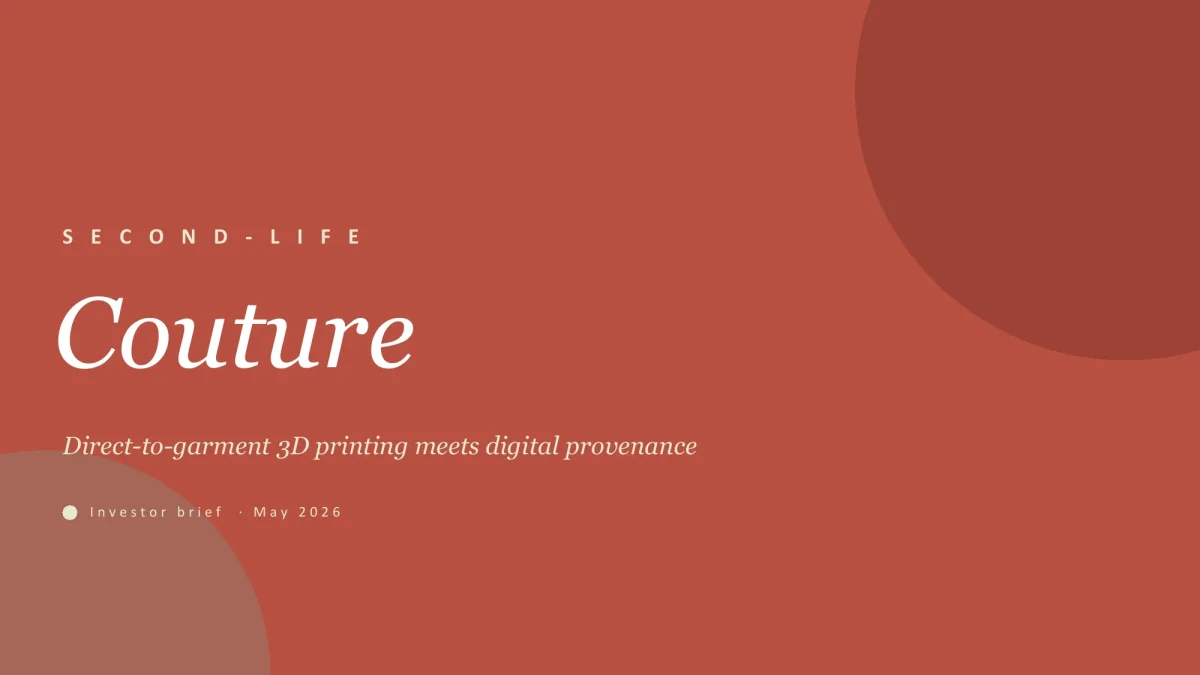
Team 1 won the Challenge with “Second-Life Couture: Direct-to-Garment 3D Printing Meets Digital Provenance.” The proposal combines personalised 3D printing on second-hand garments with a digital record of each piece’s identity and history.
In the team’s concept, customers would create a pattern through a web configurator. The pattern would then be printed directly onto an existing garment, while an NFC tag would link the piece to a digital product passport. This passport could hold information about ownership, repair and wear history, and support future resale.
The evaluation recognised the proposal’s combination of sustainability, innovative textile 3D printing, a developed business rationale and clear communication.
Three approaches to extending garment life
Team 2 presented FLORA, a concept for renewing post-consumer clothing through personalised 3D-printed enhancements. It explored how reinforcement and visible redesign could help people continue wearing garments they already own.
Team 3 focused on “Second Life for Wedding Dresses,” proposing bespoke 3D-printed details for bridal and occasionwear. The concept connects the emotional value of an existing garment with new possibilities for luxury boutiques and tailoring services.
From student ideas to industry dialogue
Eight evaluators from five countries assessed the projects across six criteria, covering presentation, content, creativity, delivery, feasibility and responses to questions. A follow-up and results session took place on 26 May.
The winning team’s recognition included opportunities to present its work online to the Textile Sector Group of the Enterprise Europe Network and the Tuscan regional textile innovation cluster. These connections offer a route for the students to discuss their ideas with the wider textile sector.
Congratulations to Team 1 and to every student who contributed to the first VERSE Challenge. Together, the three proposals show how international teamwork can open new possibilities for extending the life of clothing.